30 July 2026
IdeasFarm Diversification Idea: Offer Wild Camping on Your Land
⚠️ Important before you read on
This article is an ideas piece, not professional legal, planning or insurance advice. Planning rules for temporary camping vary by location, land type, and the nature of the facilities provided. Always check with your local planning authority and speak to your insurance broker before advertising or accepting bookings. The information below is general in nature and may not reflect your specific circumstances.
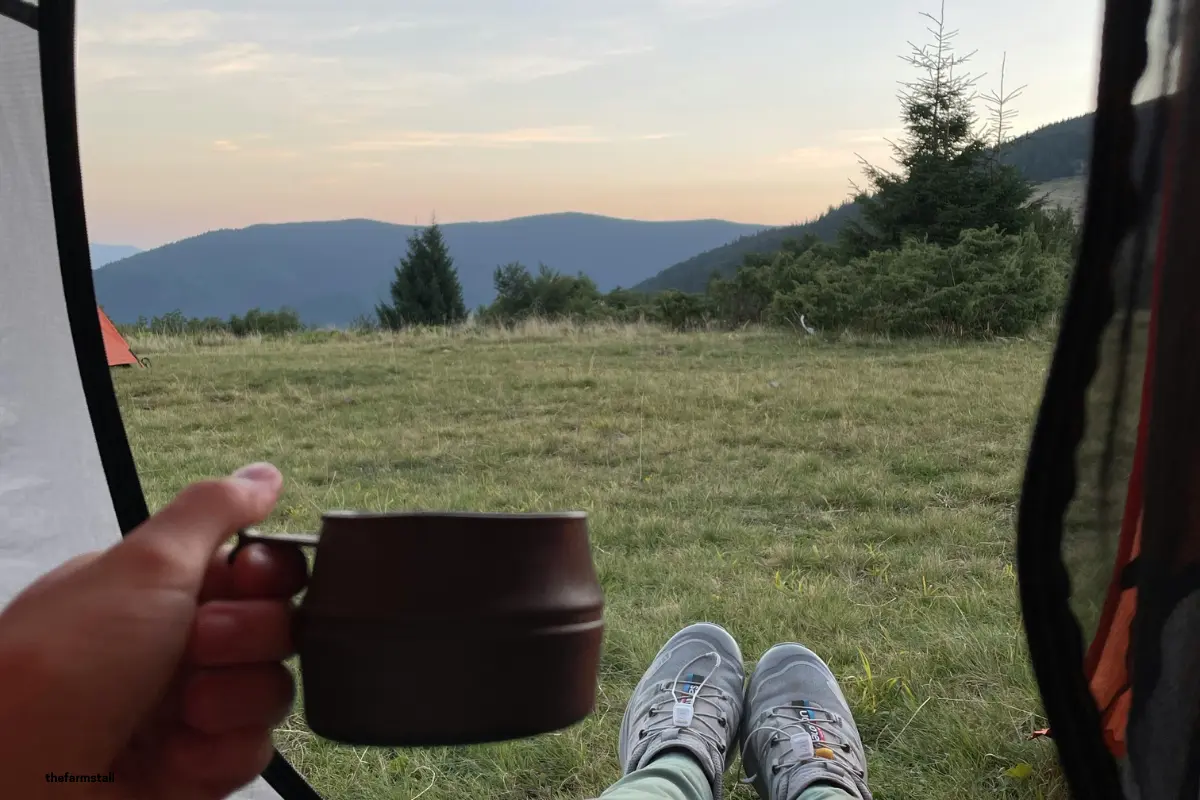
There is a quiet corner of almost every farm that doesn't do much in summer — a field edge, a strip of woodland, a hillside with a view that the cows have enjoyed for years while everyone else has driven past on the road below. To the right person, that spot is exactly what they've been looking for.
Wild camping — or at least the farm version of it, which is really "permitted camping on private land" — has grown steadily as more people look for outdoor experiences that aren't a managed holiday park. They want somewhere quieter, somewhere with a bit of the real countryside in it, somewhere they can light a fire and hear nothing but owls. Farm fields deliver all of that, and the capital investment required to offer it can be close to zero.
The legal position in England and Wales
In England and Wales, there is no general right to wild camp on private land — it's legal only with the landowner's permission. That means as the farmer, you are in a uniquely strong position: your permission is what makes the camping lawful, and you control exactly where, when and on what terms that permission is granted.
The planning picture is separate from the permission question and needs checking independently. In England, temporary camping of up to 28 days per calendar year on agricultural land generally falls within permitted development rights — but there are conditions, exceptions and local variations that mean you shouldn't rely on this without confirming it applies to your specific situation. Wales, Scotland and Northern Ireland each have slightly different rules. Speak to your local planning authority before you advertise.
How basic (or not) to go
The appeal of wild camping is precisely that it isn't a holiday park. Many of the people seeking this kind of experience don't want electric hook-ups, a reception desk or a café — they want a pitch, a fire, and to be largely left alone. That works well for you too, because the minimal-infrastructure model has the simplest planning position and the lowest ongoing cost.
A genuinely minimal setup might include nothing more than:
- A designated area of the field with enough space between pitches
- A fire pit or fire circle with a supply of logs
- A clear briefing about your rules, the boundaries of the pitch, and what to do in an emergency
- A contact number for the farm
Adding a composting toilet — even a basic one — significantly widens your audience, particularly families. A simple cold water tap or washing point does the same. Each addition broadens your market but also adds infrastructure cost and may change your planning position, so think through what you want to offer before you start building anything.
Choosing your pitch location
The best wild camping pitches on farms tend to share a few qualities: some natural shelter (a hedge, a tree line), a reasonable walking distance from farm buildings (campers want proximity to the countryside, not the slurry store), flat enough ground for a tent, and ideally a view or a focal point — a pond, a hillside, a stretch of woodland.
Think also about access. Can a camper with a loaded car get to the pitch without driving through an active farmyard? Is there somewhere obvious to park? Can you access it to check on things without crossing other guests' space? A bit of thought at this stage saves problems later.
Fire safety and leave no trace
Open fires are part of the draw for most wild campers, and managed properly they're fine. The key is giving people a clear place to have them — a designated fire pit rather than wherever they fancy — and setting out your rules before they arrive, not after they've scorched a circle in your field.
Your fire policy should cover: where fires are permitted, whether you supply wood or guests bring their own, how fires must be extinguished, what happens when conditions are dry (and who makes that call), and how ash is disposed of. Provide a bucket of water or sand at every pitch. Make it easy to do the right thing.
On waste: a clear message that guests take all rubbish with them avoids the need to build litter infrastructure. If you want to provide a bin, that's fine — but a "leave it as you found it" policy backed by clear pre-arrival communication is often cleaner and simpler to enforce.
What to charge
Wild camping on private farmland typically prices itself below established campsites and well below glamping, which is appropriate — guests are bringing everything themselves and you're providing land and (usually) a fire pit. Current market rates for a basic pitch in the UK:
- Basic pitch (tent only, no facilities): £10–£20 per night
- Pitch with fire pit and wood supplied: £20–£35 per night
- Pitch with fire pit, wood, and access to a composting toilet: £25–£45 per night
Location matters a lot — a farm in the Peak District or near the coast can command significantly more than one in a less visited area. If your field has a genuinely exceptional view or setting, price it accordingly. Wild campers who know what they're looking for will pay for the right spot.
Taking bookings without overcomplicating it
Pre-paid bookings prevent the main operational headache of wild camping, which is people turning up unannounced expecting a pitch when you're in the middle of cutting silage. If guests book and pay in advance, you know who's coming, you can brief them before they arrive, and you're not dealing with cash on a muddy field at 9pm.
A ticket sales campaign on The Farm Stall lets you set the number of pitches available per night, your price, your available dates, and a description that sets expectations clearly. Guests book online and pay through Stripe. You can block out dates when the field is being used for farming and reinstate them when it's free — which matters when your camping field is also your hay meadow.
List your camping pitches on The Farm Stall
Set up a ticket sales campaign with your available dates and pitch limit. Guests book and pay online — no cash, no surprises on arrival.
Get started free