17 June 2026
Farm BasicsHow Much Milk Does a Cow Produce Per Day?
Stand at a farm gate and watch a herd of dairy cows make their way to the parlour, and it's easy to take for granted quite how remarkable they are. A single dairy cow in the UK produces enough milk in a year to fill around 7,000 pint bottles. Every day. For ten months of the year.
But that figure isn't the same for every cow — breed makes a huge difference, as do diet, management, and where she is in her lactation. Here's a proper breakdown.
Daily milk yield by breed — at a glance
| Breed | Avg. daily yield | Annual yield | Fat % | Protein % |
|---|---|---|---|---|
| Holstein-Friesian | 28–35 litres | 8,500–10,500 L | 3.8–4.0% | 3.2–3.4% |
| British Friesian | 22–28 litres | 7,000–8,500 L | 4.0–4.2% | 3.3–3.5% |
| Jersey | 14–20 litres | 4,500–6,500 L | 5.0–6.0% | 3.8–4.2% |
| Guernsey | 16–22 litres | 5,000–7,000 L | 4.5–5.0% | 3.6–3.9% |
| Ayrshire | 18–24 litres | 6,000–7,500 L | 3.9–4.2% | 3.3–3.5% |
| Montbéliarde | 20–28 litres | 6,500–8,500 L | 3.8–4.1% | 3.4–3.7% |
Figures are typical UK averages. Individual cows, farms and feeding regimes will vary significantly.
🖤 Holstein-Friesian — the volume champion
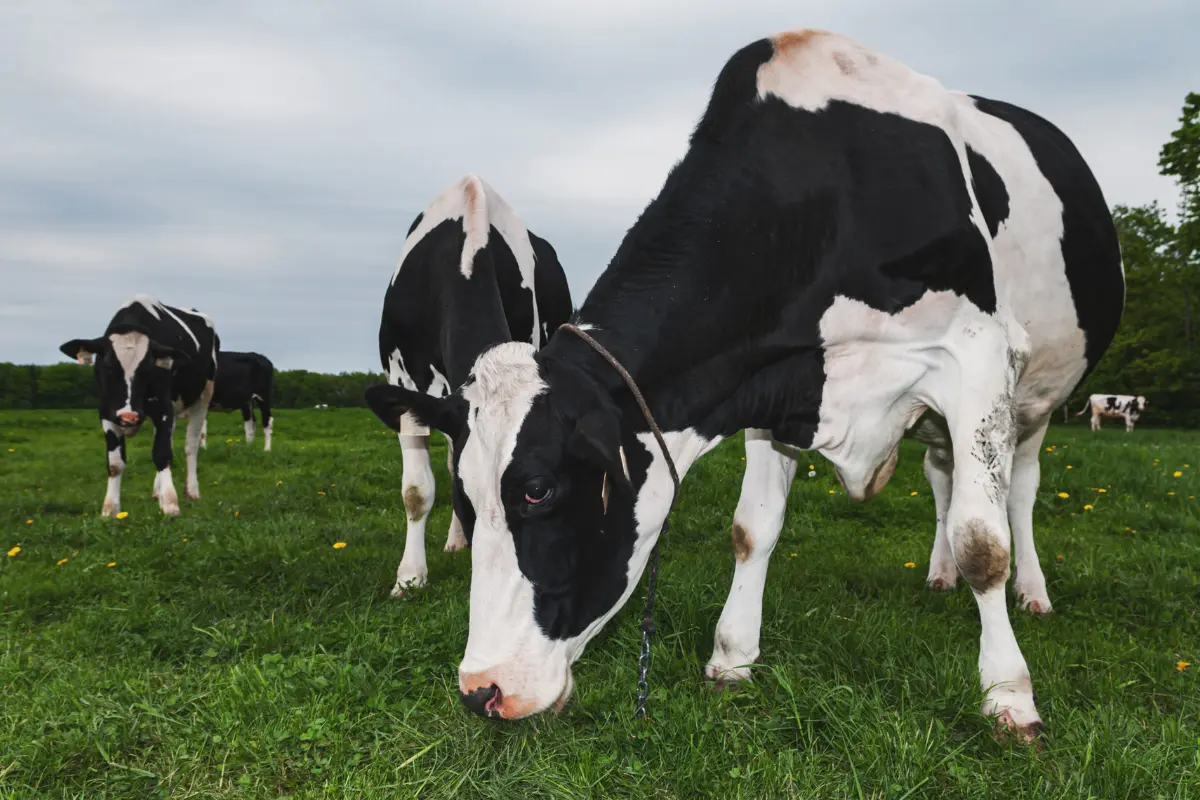
The black-and-white Holstein-Friesian is the cow most people picture when they think of a dairy farm. It's by far the most common dairy breed in the UK — around 60–70% of all dairy cows are Holsteins or Holstein crosses.
The reason is simple: volume. A good Holstein will produce 28–35 litres per day over her lactation, and top genetic individuals can reach over 50 litres at peak. Over a full lactation (305 days), yields of 10,000 litres are not unusual on well-managed farms, with elite cows exceeding 14,000 litres.
The trade-off is that Holstein milk is lower in fat and protein than most other breeds. That's fine for liquid milk, but if you're making cheese or butter, you need more milk to get the same amount of end product.
🐄 Quick fact
The Holstein originated in the Netherlands and was imported to the UK in large numbers from the 1970s onwards. They're larger than most other dairy breeds — a mature Holstein cow typically weighs 650–700 kg.
🟡 Jersey — small cow, big flavour
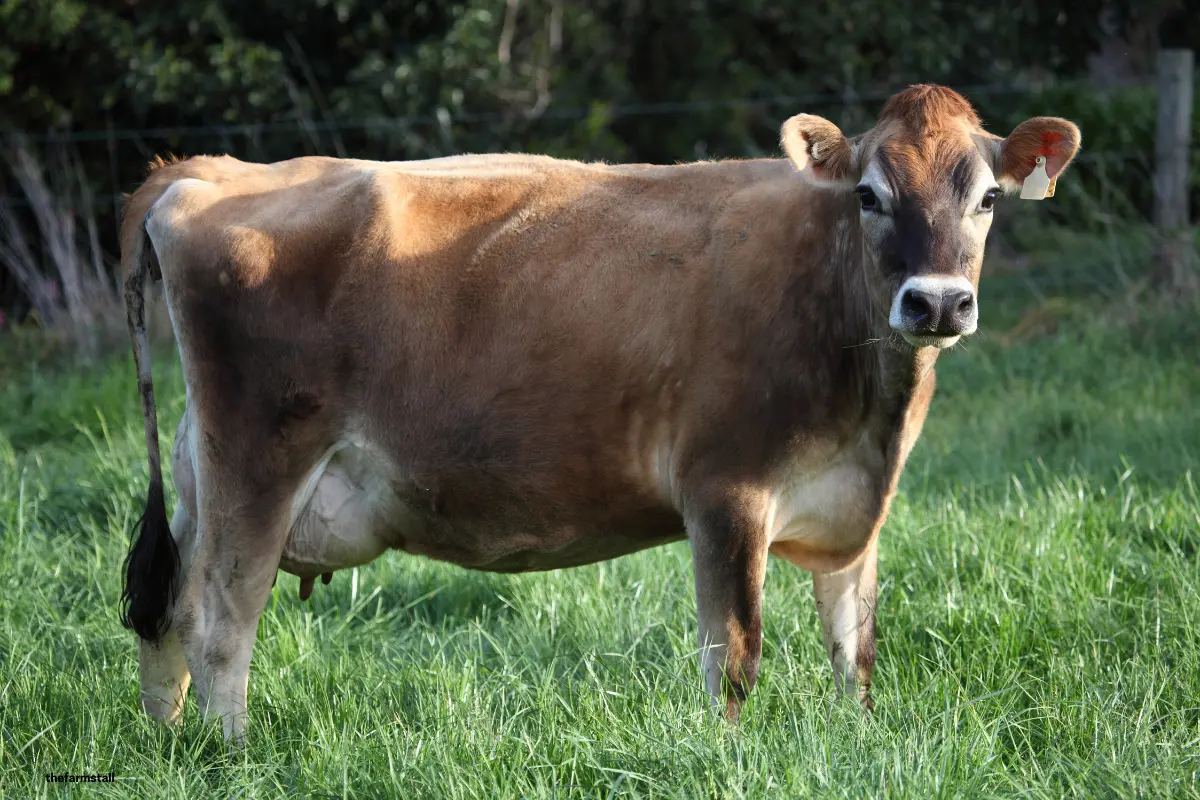
The Jersey is a small, caramel-coloured breed originating from the island of Jersey. What it lacks in volume it more than makes up for in quality. Jersey milk has a fat content of 5–6% — roughly 50% higher than a Holstein — giving it a rich, golden colour and a noticeably creamier taste.
A Jersey cow typically produces 14–20 litres per day, which sounds modest compared to a Holstein, but the solids content is so high that on a fat-corrected basis the difference narrows considerably. For artisan cheesemakers, ice cream producers and farm dairies, Jersey milk is highly sought after.
Jerseys are also known for being gentle, easy to handle and efficient converters of feed — they produce more milk solids per kilogram of body weight than almost any other breed. That efficiency is why many smaller farm dairies and smallholdings favour them.
🧈 Did you know?
The golden colour of Jersey butter and cream comes from the high levels of beta-carotene in their milk. Jerseys convert carotene from grass more efficiently than other breeds, giving their products a distinctively yellow hue.
🟠 Guernsey — the golden milk cow
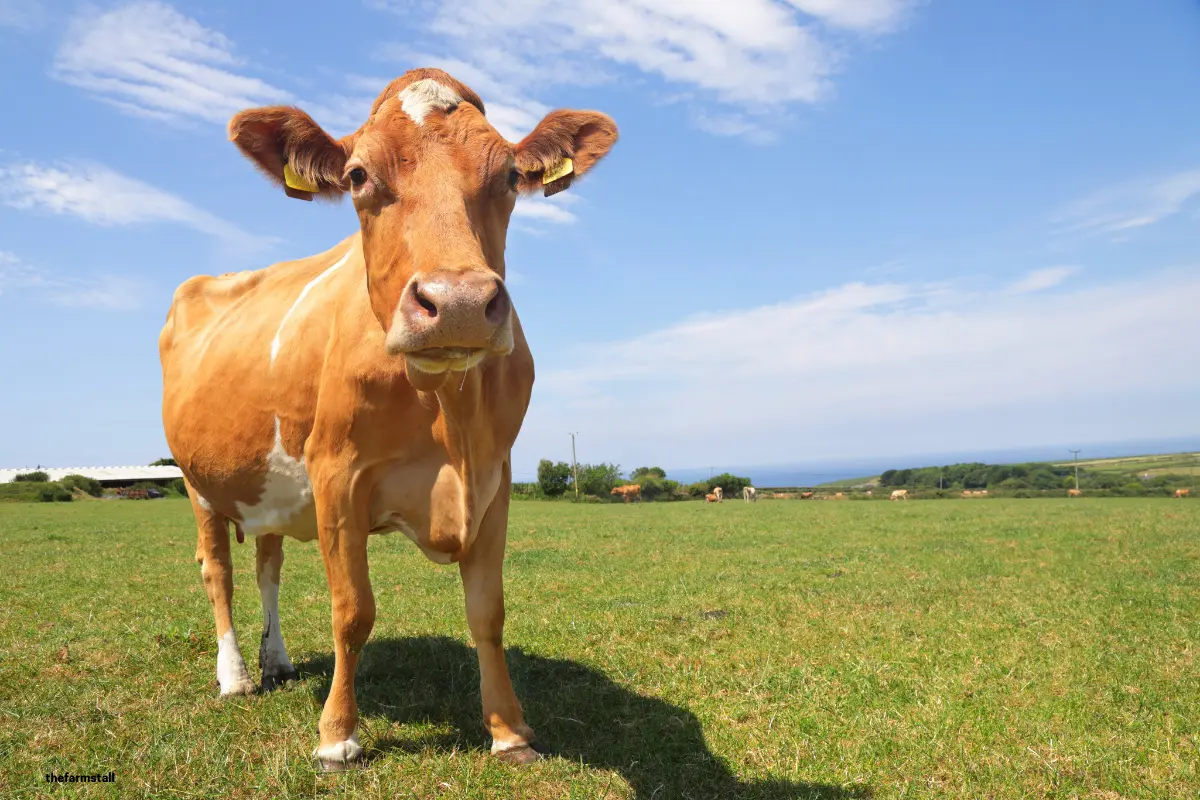
The Guernsey is a golden and white breed from the Channel Islands, closely related to the Jersey. It produces more milk than a Jersey — typically 16–22 litres per day — while still delivering rich, high-butterfat milk (4.5–5.0%) with a golden colour.
Guernseys are also notable for producing milk that is predominantly A2 beta-casein protein rather than A1. Some people who are sensitive to conventional milk find A2 milk easier to digest, which has made Guernsey milk increasingly popular with farm dairies and specialist producers in the UK.
🔴 Ayrshire — hardy and reliable
The Ayrshire originated in southwest Scotland and has been bred for centuries to thrive in difficult conditions. It's a medium-sized red-and-white breed producing 18–24 litres per day, with good fat and protein levels and milk that's particularly well-suited to cheese and butter making.
Ayrshires are popular on grazing systems because of their hardiness and strong feet and legs. They tend to have long, productive lives — many Ayrshire cows are still milking well into their eighth or ninth lactation, which is rare for Holsteins.
🟤 Montbéliarde — the continental crossbreed
Originally from the Franche-Comté region of France, the Montbéliarde has become increasingly common on UK farms over the last two decades, often used to cross with Holsteins. The cross (sometimes called a "MontyFriesian") tends to combine the Holstein's yield with better fertility, feet, longevity and milk solids.
Pure Montbéliardes produce around 20–28 litres per day with good protein levels — which is why the breed is traditionally used to make Comté and Gruyère cheeses in France. In the UK, many Montbéliarde crosses are found in lower-input, grass-based systems where longevity and robustness matter.
Inside the milking parlour
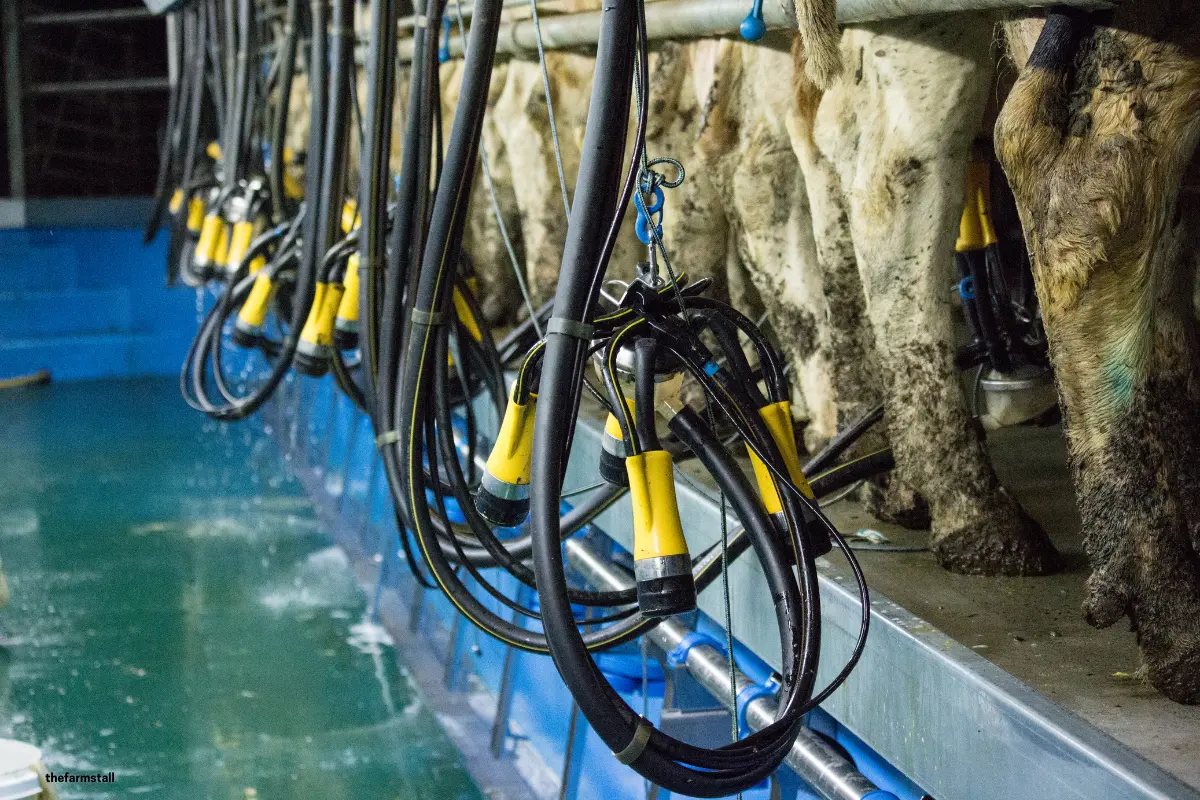
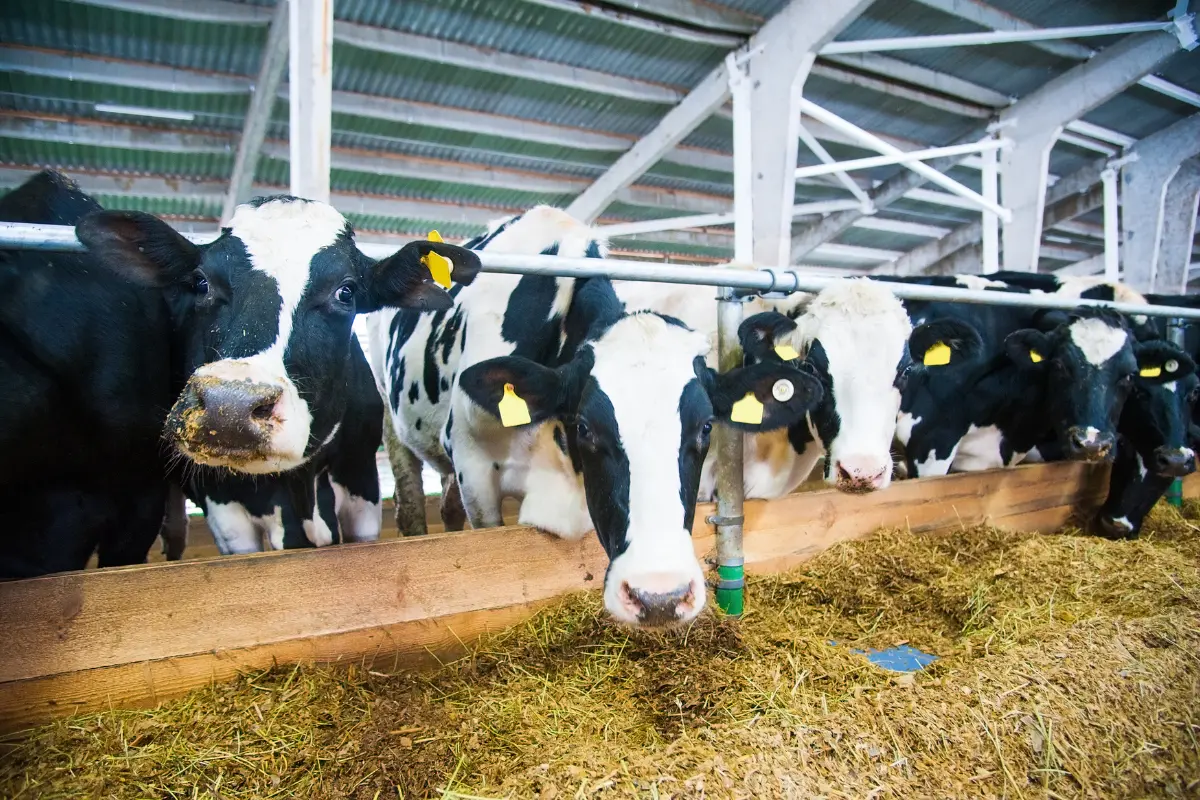
Most dairy cows in the UK are milked twice a day — typically early morning and late afternoon — though some high-yielding herds are milked three times. Each milking takes around 5–8 minutes per cow.
Traditional parlours are herringbone or parallel designs, where cows stand at an angle in rows while the stockperson attaches teat clusters — the rubber-lined cups that apply gentle suction to draw out the milk. Larger farms increasingly use rotary parlours, where cows step onto a slowly revolving platform and are milked as it turns.
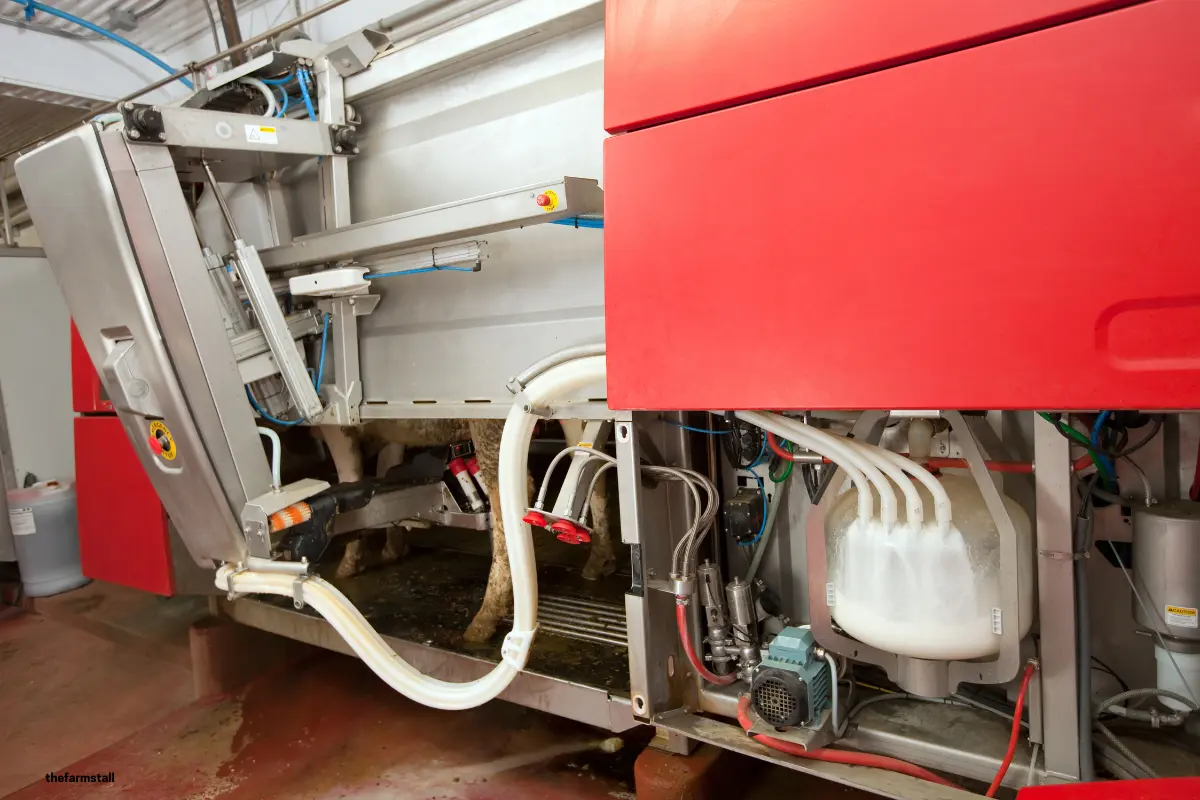
The newest technology — robotic milking units (AMS, or Automatic Milking Systems) — lets cows choose when to be milked. Cows typically visit the robot 2–4 times per day voluntarily, with high-yielding cows often milking more frequently. Robotic milking has grown significantly on UK farms since the 2010s, particularly on smaller and medium-sized herds where labour is a challenge.
Why does yield change over time?
A cow doesn't produce the same amount of milk every day. After calving, milk production rises steeply — reaching its peak ("peak yield") at around 6–8 weeks. After that, it gradually declines over the rest of the lactation.
📈 The lactation curve — simplified
This is why daily yield figures are always averages — the same cow producing 18 litres today might have been giving 32 litres at peak eight weeks after calving.
What affects how much milk a cow produces?
🧬 Genetics
Selective breeding has dramatically increased yields over the decades. Modern Holstein genetics can sustain yields that would have been considered exceptional 50 years ago. Sire selection is one of the biggest levers farmers have over herd performance.
🌿 Diet and nutrition
Milk is mostly water, and cows need enormous amounts of energy and protein to produce it. A high-yielding cow may eat 25+ kg of dry matter per day. Getting the diet right — grazing quality, silage, concentrates — is critical to achieving potential yields.
🐄 Parity (number of lactations)
First-calf heifers (cows having their first calf) typically produce 20–25% less than older cows. Yield usually peaks in the third or fourth lactation before declining gradually in later years.
🏡 Management and welfare
Comfortable housing, good dry cow management, low stress and careful transition feeding (the period around calving) all affect how well a cow milks. A cow that calves smoothly and recovers quickly will almost always outperform one that struggles around calving.
FAQs
How much milk does a cow produce per day?
A modern Holstein-Friesian dairy cow in the UK produces around 28–35 litres of milk per day on average, though high-yielding individuals can exceed 50 litres. Smaller breeds like the Jersey produce less in volume — around 14–20 litres — but their milk is much richer in fat and protein.
Which cow breed produces the most milk?
The Holstein-Friesian is by far the highest-yielding dairy breed in the world. A top Holstein in the UK will produce over 10,000 litres in a single lactation (roughly 305 days). The British Friesian is slightly lower yielding but produces richer milk. For milk quality rather than volume, Jersey and Guernsey cows are hard to beat.
How long does a cow produce milk for?
A cow only produces milk after she has had a calf. Each milking period (called a lactation) lasts around 305 days. After that, the cow is given a "dry period" of about 6–8 weeks before she calves again. Most dairy cows have one calf per year, so they are milked for around 10 months out of every 12.
Do beef cows produce milk?
Yes, but only enough to feed their calf. Beef breeds like the Hereford, Limousin and Aberdeen Angus have not been selectively bred for milk production, so they produce only 4–8 litres per day — just enough to raise their young. Dairy breeds have been bred over generations specifically for high milk output.
Why does Jersey milk taste so creamy?
Jersey cows produce milk with a much higher fat content than other breeds — typically 5–6% fat compared to around 3.9% for a Holstein. That's why Jersey milk, cream and butter have a distinctively rich, golden colour and flavour. The fat globules in Jersey milk are also larger, which makes it easier to separate and ideal for artisan dairy products.
If you're looking for dairy products straight from farms that milk these breeds — fresh milk, cream, butter, cheese and more — browse local farm produce or explore the directory to find a farm near you.