15 June 2026
Farm BasicsWhat Is the Difference Between Hay, Straw and Silage?
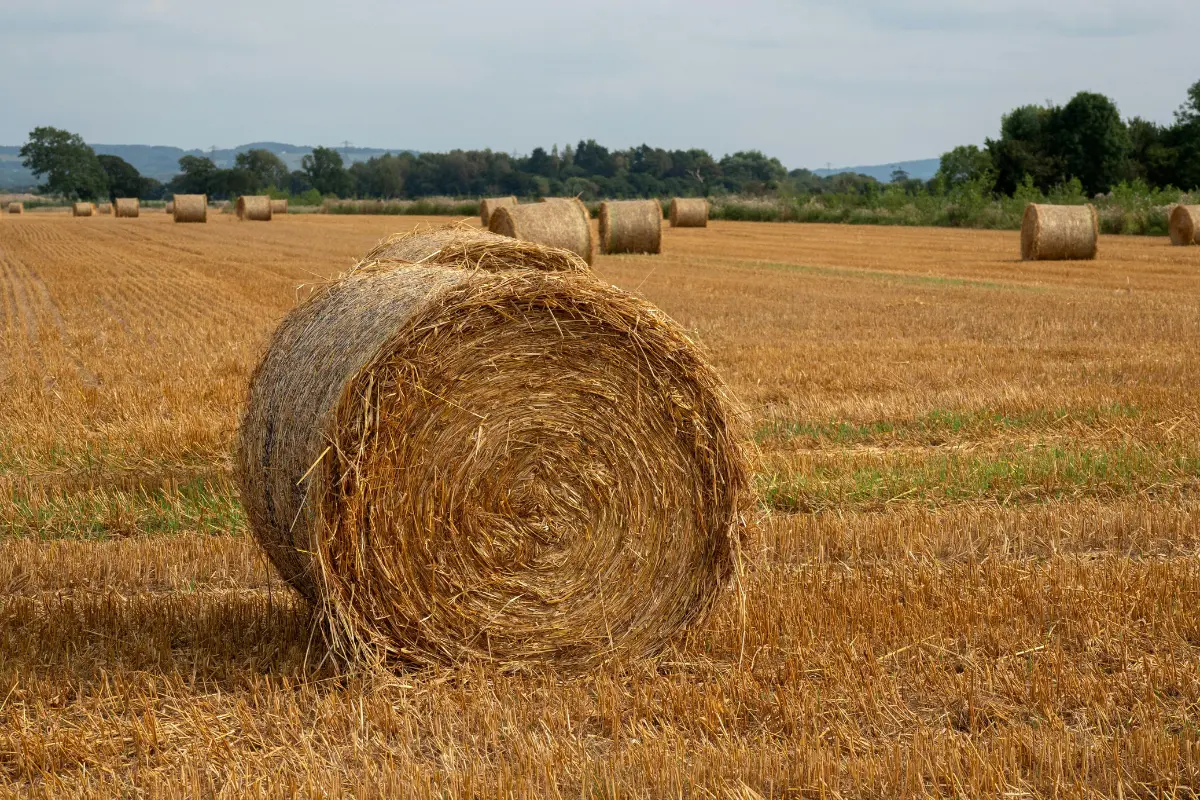
If you've driven past a farm and seen round bales sitting in a field - some golden brown, some pale yellow, and some wrapped tightly in black plastic - you might have wondered what the difference is between them. Hay, straw and silage all start life as grass or crops growing in a field, but by the time they're baled up they're three completely different products, and each one does a different job on the farm.
Here's a simple guide to what each one is, how it's made, and what it's used for.
At a Glance
Hay
- Made from
- Grass or legumes
- Preserved by
- Drying in the sun
- Colour
- Golden brown
- Wrapped?
- No
- Used for
- Animal feed
- Dry matter
- 85-90%
Straw
- Made from
- Crop stalks (wheat, barley, oats)
- Preserved by
- Drying - left after harvest
- Colour
- Pale yellow
- Wrapped?
- No
- Used for
- Bedding - sometimes feed
- Dry matter
- 85-90%
Silage
- Made from
- Grass, maize or wholecrop
- Preserved by
- Fermentation - sealed airtight
- Colour
- Dark green inside
- Wrapped?
- Yes - black plastic
- Used for
- High-energy feed
- Dry matter
- 25-40%
🌾 Hay - dried grass for feeding
Hay is made from grass that's been cut and dried in the sun. Farmers cut the grass in early summer when it's full of goodness, then leave it to dry in the field for several days until most of the moisture has gone. Once it's dry enough, it's baled up and stored in a barn.
Because it's been dried, hay keeps for a long time without going mouldy. Farmers feed it to their animals - sheep, horses, cattle and goats - during the winter when there's no fresh grass growing in the fields.
Hay smells sweet, a bit like a sunny summer day - that's the smell of dried grass and wildflowers. If you've ever stood in a barn full of hay, you'll know exactly what we mean.
🐑 Did you know?
Horses and donkeys love hay. A medium-sized horse eats around 10-12 kg of hay every day in winter - that's roughly a bale every three or four days.
🌿 Straw - what's left after harvest
Straw is what's left behind after a grain crop - like wheat, barley or oats - has been harvested. When the combine harvester goes through a field in summer, it takes the grain off the top of the plant. The dry, hollow stalks left behind are the straw.
Straw is pale yellow and feels dry and scratchy. It doesn't have much goodness in it - unlike hay, you couldn't feed animals on straw alone and expect them to stay healthy. What straw is brilliant at is soaking up moisture, which is why farmers use it as bedding on the floor of animal sheds.
If you've ever seen a nativity scene with animals lying on golden bedding, that's straw - it's been used for animal bedding for thousands of years.
🐄 Did you know?
A beef cattle shed can use hundreds of bales of straw as bedding through the winter. The used straw, mixed with manure, makes brilliant compost for spreading back on the fields in spring.
⚫ Silage - fermented grass for winter energy
Silage is grass that's been preserved by fermentation - a bit like how we make yoghurt or cheese. Instead of being dried out like hay, silage grass is cut green and wet, then wrapped tightly in black plastic to keep all the air out.
Without air, bacteria in the grass turn the sugars into lactic acid - the same thing that makes yoghurt tangy. The acid preserves the grass and stops it going mouldy. When you open a silage bale, it smells a bit like vinegar.
Silage is much more nutritious than hay because the goodness in the grass is trapped inside rather than lost during drying. Most dairy cows and beef cattle in the UK eat silage through the winter - it gives them the energy they need to produce milk and grow.
🐄 Did you know?
The black colour of silage wrap isn't just for looks - it blocks UV light from the sun, which would otherwise damage the plastic and let air in. Some farmers use green or white wrap, but black is the most common in the UK.
Why does it matter which one you use?
For horses
Horses need hay, not silage. Silage can contain bacteria that are harmful to horses. Good quality meadow hay is the traditional and safest winter feed for horses and ponies.
For dairy cows
Dairy cows need lots of energy to produce milk, so they mostly eat silage in winter. Silage has much more energy per kilogram than hay, which is why it's the main winter feed on most dairy farms.
For sheep
Sheep can eat both hay and silage. In winter, pregnant ewes are often fed hay or silage to keep them in good condition before lambing, with straw added as a cheap roughage filler.
How to tell them apart
Next time you pass a field full of bales, see if you can spot the difference. Here's what to look for:
| 🌾 Hay | 🌿 Straw | ⚫ Silage | |
|---|---|---|---|
| 👁️ Colour | Golden brown | Very pale yellow | Black outside, dark green inside |
| 👃 Smell | Sweet and grassy | Dry and dusty | Tangy, like vinegar |
| 🎁 Wrapped? | No - bare bale | No - bare bale | Yes - black plastic |
| 💧 Dry or wet? | Dry and crackly | Very dry and brittle | Damp and dense inside |
The quick summary
- 🌾Hay is dried grass - it smells sweet, looks golden, and is fed to animals as food.
- 🌿Straw is dried crop stalks - it looks pale yellow, has little food value, and is mainly used as bedding for animals to sleep on.
- ⚫Silage is fermented grass wrapped in black plastic - it smells tangy, is packed with energy, and is the main winter feed for cattle on most UK farms.
FAQs
What is the difference between hay and straw?
Hay is made from dried grass and is used as animal feed - it has real nutritional value. Straw is made from the dry stalks left behind after a grain crop like wheat or barley has been harvested. Straw has very little nutritional value and is mainly used as bedding for animals, though it can be fed in small amounts as a low-energy roughage.
What is silage and how is it different from hay?
Silage is grass or other crops that have been preserved by fermentation rather than drying. It is cut green, compacted to remove air, and sealed in black plastic wrap or a clamp. Without oxygen, the grass ferments and preserves rather than rotting. Silage is much higher in energy than hay and is the main winter feed for cattle on most UK farms.
Why is silage wrapped in black plastic?
Silage is wrapped in black plastic to keep air out. The fermentation process that preserves silage only works without oxygen - if air gets in, the grass goes mouldy instead of fermenting correctly. The black colour also helps retain heat during fermentation and protects the silage from UV light.
Can animals eat straw?
Yes, but it provides very little nutrition. Straw is mainly made of cellulose and has almost no protein or digestible energy compared with hay or silage. Cattle can eat straw as a roughage source when mixed with other feeds, but sheep and horses should only have small amounts. Straw is most commonly used as bedding - it absorbs moisture well and keeps animals comfortable.
Next time you're out and about, see if you can spot the difference for yourself - and if you're after meat, eggs or other produce from the farms that make all this happen, browse local produce or read more farming guides on The Farm Stall.