30 July 2026
IdeasFarm Diversification Idea: Host a Calf Feeding Morning
⚠️ Important before you read on
This article is an ideas piece, not professional legal, insurance or biosecurity advice. Before hosting any paying visitors on your farm — particularly for hands-on livestock contact — you must speak to your insurance broker, review your public liability cover, and familiarise yourself with APHA open farm guidance and the Visitor Code of Practice. The information below is general in nature and may not reflect your specific situation.
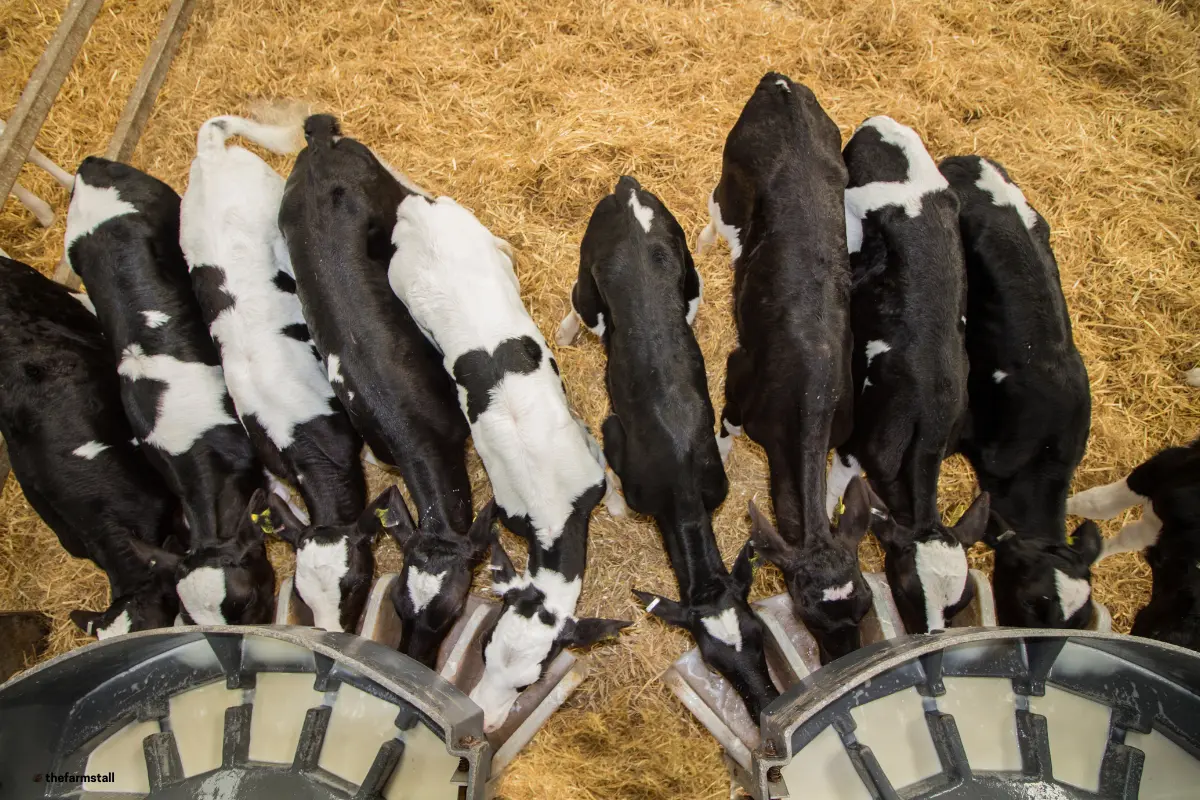
If you run a dairy farm, you probably don't think twice about calf feeding. It's just part of the morning routine — buckets, teats, a pen full of hungry youngsters pulling at the milk with everything they've got. But to a family from a nearby town, that same ten minutes is magic.
Calf feeding experiences have grown quietly into one of the most popular hands-on farm visitor activities in the UK. They're relatively easy to set up compared to larger open-farm infrastructure, they use animals and a routine you already have, and they appeal to a wide audience — families with young children, school groups, adults who simply want a genuine farm morning rather than a theme park version of one.
Why dairy farms are well placed for this
The timing works in your favour. Spring calving herds have a concentrated window — typically February through to May — when bucket-fed calves are available in numbers, are reliably enthusiastic feeders, and are small enough to feel safe and approachable to visitors who have never been near cattle before. That window is also when families start looking for outdoor things to do after the winter, often over school half-term and Easter.
Year-round calving operations have more flexibility — a calf feeding morning can potentially run at any time of year as long as the right age animals are available. This also makes it easier to test the concept before committing to a full season.
What a morning typically looks like
The format is simple: small groups, a set time slot, supervised from start to finish. A typical session might run like this:
- Welcome and briefing in the farmyard — what to expect, how to behave around the animals, biosecurity rules
- Short walk to the calf shed, each visitor or family group given a bucket of milk replacer
- Supervised feeding — your team (or you) on hand throughout to assist and manage the calves
- Q&A — visitors almost always have questions about dairy farming, the calves' names, what happens to them next
- Handwashing — mandatory, enforced, no exceptions
- Optional extras: a farm walk, a look at the parlour, a hot drink in a barn café area
Keeping sessions to 45–60 minutes and capping numbers at 10–20 visitors maintains a personal feel and makes supervision manageable. Smaller groups also justify a higher ticket price.
Getting biosecurity right — non-negotiable
This is the part that cannot be skipped or treated as a formality. Young calves can carry pathogens — particularly Cryptosporidium and E.coli O157 — that are capable of causing serious illness in people, and children are especially vulnerable. Open farm operators have a legal and moral duty to manage this properly.
- Handwashing facilities with soap and running water must be available at the exit from the animal contact area — gel alone is not sufficient for Cryptosporidium
- Clear verbal briefing before entry: no eating or drinking in the animal area, no face contact with the animals, no putting hands near mouths
- Supervision throughout — not occasional supervision, constant
- Signage at key points reminding visitors of the rules
- Exclusions: visitors who are pregnant, immunocompromised, or have had recent gastrointestinal illness should be advised not to participate in direct animal contact
The APHA and HSE publish guidance for open farms and visitor attractions involving livestock. Read it before you open — not after an incident.
Insurance and liability
Standard farm public liability insurance may not automatically cover paying visitors engaged in hands-on livestock contact. You need to speak to your broker specifically about agritourism activities, get confirmation of what is and isn't covered, and consider whether you need an extension or a different policy altogether.
This is not an area to assume or approximate. A single claim arising from a visitor illness could be serious. Your insurer needs to know exactly what you are doing, before you do it.
How to take bookings
Pre-payment is strongly advisable — it filters out casual enquiries, reduces no-shows, and means you know your numbers in advance. A timed-entry ticketing system that caps each session at your chosen visitor limit is the cleanest way to manage this.
You can create a ticket sales campaign on The Farm Stall, set your session dates and times, and let customers book and pay online. The money goes straight to your bank via Stripe. If sessions fill up, you simply stop selling — no overbooking risk, no cash handling on the day.
What to charge
Pricing depends on your location, what's included, and the local market. As a starting point:
- Adults: £10–£18 per person
- Children (3–12): £6–£12
- Under 3s: often free
- Family ticket (2 adults + 2 children): £30–£50
If you add a farm walk, refreshments or an extra activity, the higher end of those ranges is easy to justify. Look at what comparable open farms near you charge — don't undercut yourself because you're a dairy farm "just letting people feed calves." The experience has real value; price it accordingly.
Test it before you commit
If you're not sure there's appetite in your area, run a single morning by invitation first — neighbours, local Facebook groups, a school — before putting tickets on sale to the public. Gauge the reaction, identify any operational problems, and refine the format before you scale.
A calf feeding morning is one of those experiences that needs almost no capital expenditure — you have the animals, you have the shed, you have the routine. The main investment is your time, your attention to the safety and biosecurity details, and the willingness to welcome people into what is usually a private part of your working day. For many visitors, that openness is precisely the point.
List your calf feeding morning on The Farm Stall
Create a ticket sales campaign, set your session dates and sizes, and take pre-paid bookings online. Free to list — we take a small cut only when you sell a ticket.
Get started free